

01
Preprint · SSRN2026
The Swayambu Triad: A Unified Architecture for Behavioral Risk
The unifying architecture that binds the program's frameworks into one structure.
DOI: 10.2139/ssrn.6230818Behavioural sciences · Addiction in the digital environment · Human–machine temporal stability · AI. Independent research on the structural risks emerging where human cognition meets machine speed — published openly for scrutiny, collaboration, and improvement.
“Available for review, replication, falsification, and improvement.”
Moving through cities, weather, and deadlines — watching decisions get made under pressure by people who had no framework for it. The portfolio is not a career change. It is the long transcription of a single question asked in motion.
I am an independent researcher based in Chennai, India. My work focuses on the structural risks emerging at the intersection of human cognition and machine speed — particularly in high-stakes environments where temporal pressure, emotional vulnerability, and cognitive overload intersect.
I hold a B.Sc. in Statistics from the University of Madras (1992–1996) and have professional experience in payroll systems. My research is interdisciplinary and draws on observation, existing scientific literature, and open experimental frameworks rather than formal training in computer science, cryptography, or cognitive neuroscience. It is driven by twenty-five years of observation: watching the gap between machine speed and human cognition close in trading platforms, social media, fraud environments, and now in AI companions and relational machines.
My approach is architectural rather than algorithmic. My central concern is structural residue: the unintended traces left by systems designed for high engagement, frictionless experience, and universal accessibility. My solution is structural: systems built without the capacity to retain identity-linked cognitive and behavioural data beyond a single session.
AI language models are used as research-assistance tools for literature analysis, critical review, drafting, and instrument development. I publish openly for independent human scrutiny and peer review. Those with greater resources and expertise are invited to take this work further.
“Each book is a different doorway into the same room.”
— From the portfolio deck
A B.Sc. in Statistics — the analytical foundation for an interdisciplinary research programme.
Twenty-five years watching digital systems grow into human life — watching decisions made under pressure by people who had no framework for it.
The questions that emerged in motion became books, then papers, then open instruments. Not a career change — the long transcription of a single question.
Published across SSRN & Zenodo · Available for review, replication, falsification, and improvement.
The work asks how structural risk forms at the boundary between human cognition and machine speed — and whether the architecture of a system can be made safe by design, rather than patched after harm.
The unintended traces left by systems built for high engagement, frictionless experience, and universal accessibility.
The research asks whether structural changes to systems can reduce risks that are otherwise placed on the individual user.
Systems built without the capacity to retain identity-linked cognitive and behavioural data beyond a single session.
An open public framework for ethical digital crisis governance — the ethical spine of the program.
How system speed can conflict with user intention — and how to restore the gap.
Temporal synchronisation and information-density displacement as a single model for cognitive restoration.
Why the volume of data overrides the evaluation of the user — density-captured decision bias.
An open public extension of DDGS for ethical cyber-fraud containment.
An open technical architecture for ethical system behaviour under uncertainty.
A risk-awareness framework for high-velocity human-in-the-loop environments.
A structural precondition for safer human–machine interaction in the age of cognitive biomarkers.
A temporal framework for mitigating systemic behavioural risk in financial execution interfaces.
For twenty-five years that gap has narrowed in trading floors, feeds, fraud channels, and now in AI that simulates relationship. The architectures we build in the next few years will decide whether digital systems protect cognition — or quietly consume it.
As machines simulate relationship, the structural residue of intimacy becomes a safety problem the field has not yet named.
HMTS proposes that speed-optimised interfaces can create conditions in which system tempo conflicts with user intention. This is a central hypothesis of the HMTS framework.
Engagement-optimised systems can shape attention through structural design. The research therefore explores whether recovery interventions should address environmental structure alongside individual behaviour.
D³-FRAUD proposes that some fraud environments exploit a combination of cognitive overload, time pressure, and information asymmetry.
“Every artifact is published for review, replication, falsification, and improvement.”
The frameworks that anchor the books — published openly so their claims and mechanisms can be examined, tested, replicated, or challenged. Each carries a persistent DOI and is openly archived.
A unified architecture for behavioral risk — the framework that binds the program into a single structure.
Theoretical foundations, falsifiable protocols, and governance frameworks for human–machine decision chains.
Human–machine temporal synchronisation and information-density displacement, fused for cognitive restoration.
Frameworks, protocols, and falsifiable theory — each with a persistent DOI. Not peer-reviewed; offered openly for scrutiny, collaboration, and improvement.
The unifying architecture that binds the program's frameworks into one structure.
DOI: 10.2139/ssrn.6230818Temporal design as a structural defence in trading interfaces.
DOI: 10.2139/ssrn.6235878The program's theoretical core and its falsifiable protocols.
DOI: 10.5281/zenodo.21281629How cognitive pressure changes what a language model gets wrong — and how.
DOI: 10.5281/zenodo.20139619The model that names the collapse of cognition and time under load.
DOI: 10.5281/zenodo.20036121A visual cognitive architecture for working backward from a stable future.
DOI: 10.5281/zenodo.20008629The fused theory behind temporal synchronisation and density displacement.
DOI: 10.5281/zenodo.19597791The hypothesis that information density can become a dominant contributor to decision failure.
DOI: 10.5281/zenodo.19495430A proposed system architecture designed not to retain identity-linked cognitive data beyond a session.
DOI: 10.5281/zenodo.19219978Regulating the time the mind is given to integrate what the machine just showed it.
DOI: 10.5281/zenodo.19191599The foundational hypothesis: machine speed, when insufficiently structured around human decision time, may conflict with human intent.
DOI: 10.5281/zenodo.19115893The recovery manual behind the addiction books.
DOI: 10.5281/zenodo.18878292Extending governance into fraud containment without surveillance.
DOI: 10.5281/zenodo.18820076A proposed architecture for governing system velocity under variance.
DOI: 10.5281/zenodo.18820130The governance standard underpinning the whole program.
DOI: 10.5281/zenodo.18805343Browser-native instruments designed to make the proposed mechanisms testable, rather than merely descriptive. Each is published openly for replication.
Browser-native artifacts for volatility measurement, protocol logic, and interactive visualization.
DOI: 10.5281/zenodo.21282997An interactive stress laboratory for testing temporal-synchronisation hypotheses.
DOI: 10.5281/zenodo.19604203A browser-based instrument for testing informational divergence in real time.
DOI: 10.5281/zenodo.19497349A working prototype of a system built to retain no identity-linked cognitive data.
DOI: 10.5281/zenodo.19220313A browser-based analysis tool for HMTS Behavioral Testing Suite CSV data.
DOI: 10.5281/zenodo.19159880Open instrument, sample dataset, and documentation — built for replication.
DOI: 10.5281/zenodo.19118694From delivery partner to author-researcher. Nine field guides across decision, attention, and interior architecture.
Books are companion works and public-facing applications of the broader research programme; they are not presented as peer-reviewed research papers.
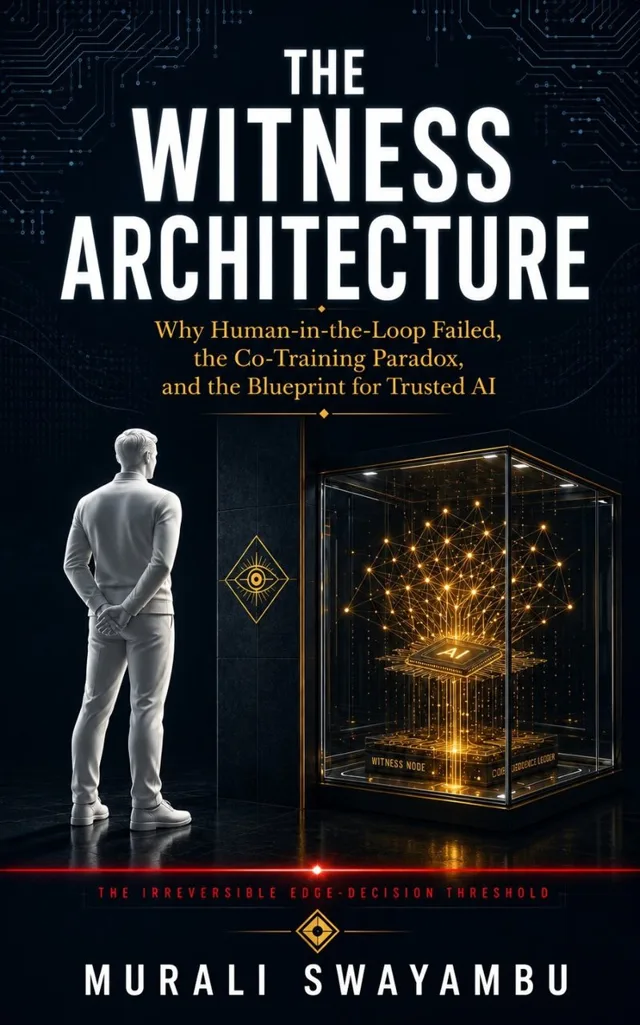
Why Human-in-the-Loop Failed, the Co-Training Paradox, and the Blueprint for Trusted AI
MURALI SWAYAMBU
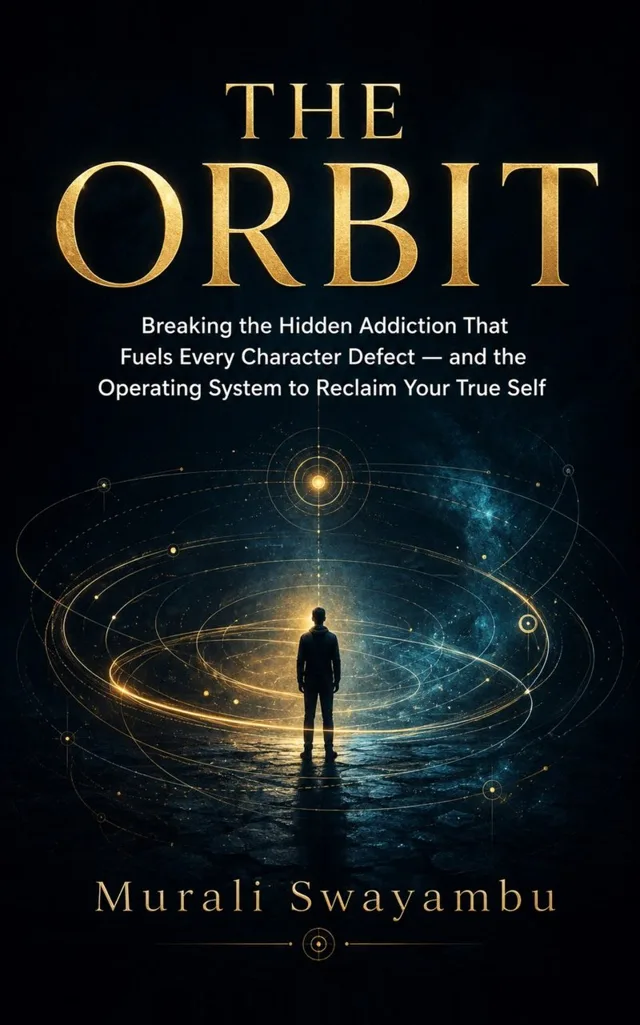
Breaking the Hidden Addiction That Fuels Every Character Defect — and the Operating System to Reclaim Your True Self
MURALI SWAYAMBU
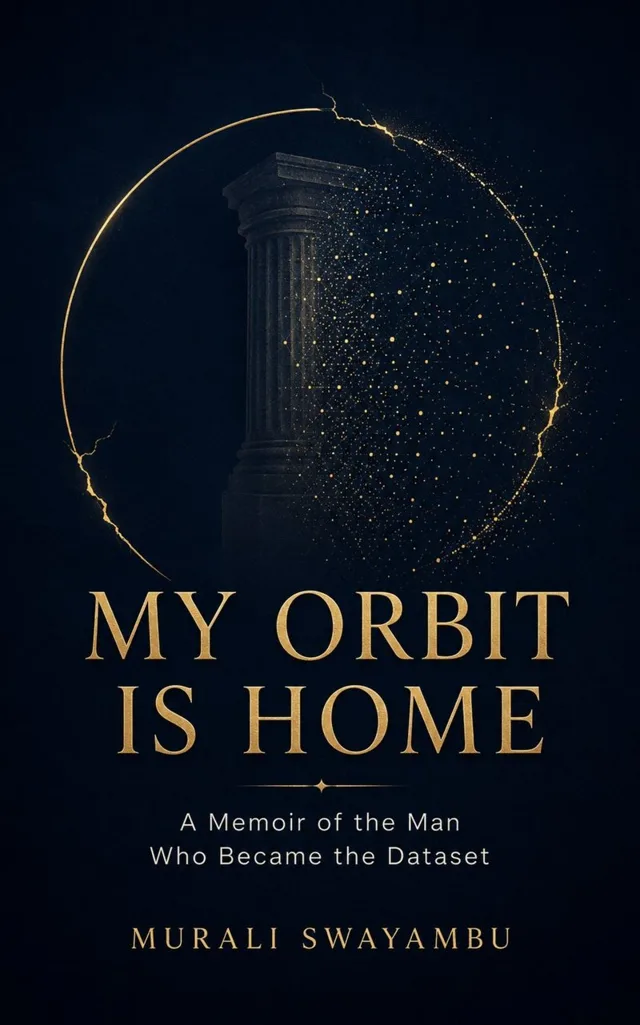
A Memoir of the Man Who Became the Dataset
MURALI SWAYAMBU
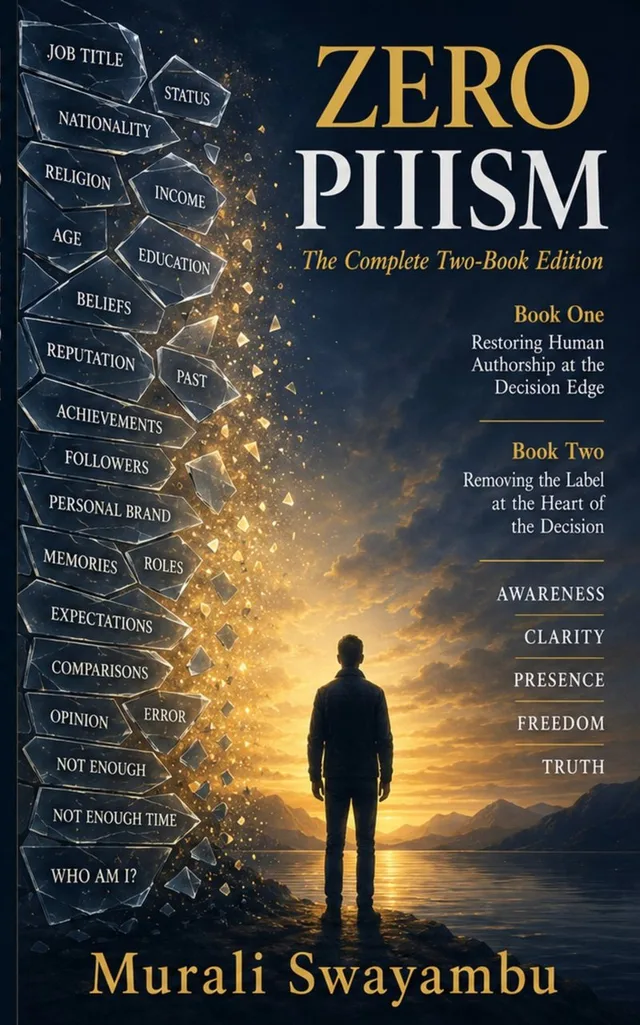
The Complete Two-Book Edition · Book One: Restoring Human Authorship at the Decision Edge · Book Two: Removing the Label at the Heart of the Decision
MURALI SWAYAMBU

An Anchor & Abyss Recovery Book · A Two-Book Addiction Recovery Omnibus
MURALI SWAYAMBU

Global Edition · Trading Addiction, Structural Risk, and the Road Back to Choice
MURALI SWAYAMBU

A Cognitive Framework for Understanding Obesity, Ending the Diet War, and Authoring Your Mind
MURALI SWAYAMBU

The 6-Step Protocol to Turn Guilt from a Survival Alarm into a Compass for Wisdom
MURALI SWAYAMBU

A Field Guide to Deciding Well Under Pressure
MURALI SWAYAMBU
Support that allows an independent researcher to sustain the time required for long-form research, experimentation, documentation, and publication. The work is open. The invitation is to make it sturdier.
Sustained access to language-model APIs and compute supports literature analysis, critical review, instrument development, experimentation, documentation, and replication tooling.
The tools, hosting, and platforms required to keep the open instruments running and freely accessible.
Funding to engage expert reviewers and collaborators — moving the work from open preprint toward peer-reviewed publication.
Article-processing costs for open-access journals so the research stays free to read and free to build on.
Support that sustains the time required for long-form research, experimentation, documentation, and publication.
Zenodo archiving, DOI registration, versioning, and the long-term upkeep of an openly-published corpus.
Published openly across SSRN and Zenodo · Available for review, replication, falsification, and improvement.
Scan with any UPI app
to support the research
Open to review, replication, falsification, and improvement. Those with greater resources and expertise are invited to take this work further.
No institutional backing. Open by design. Your support is what keeps the work moving from preprint toward peer review.